
Mining water storage: process water, capacity and site access
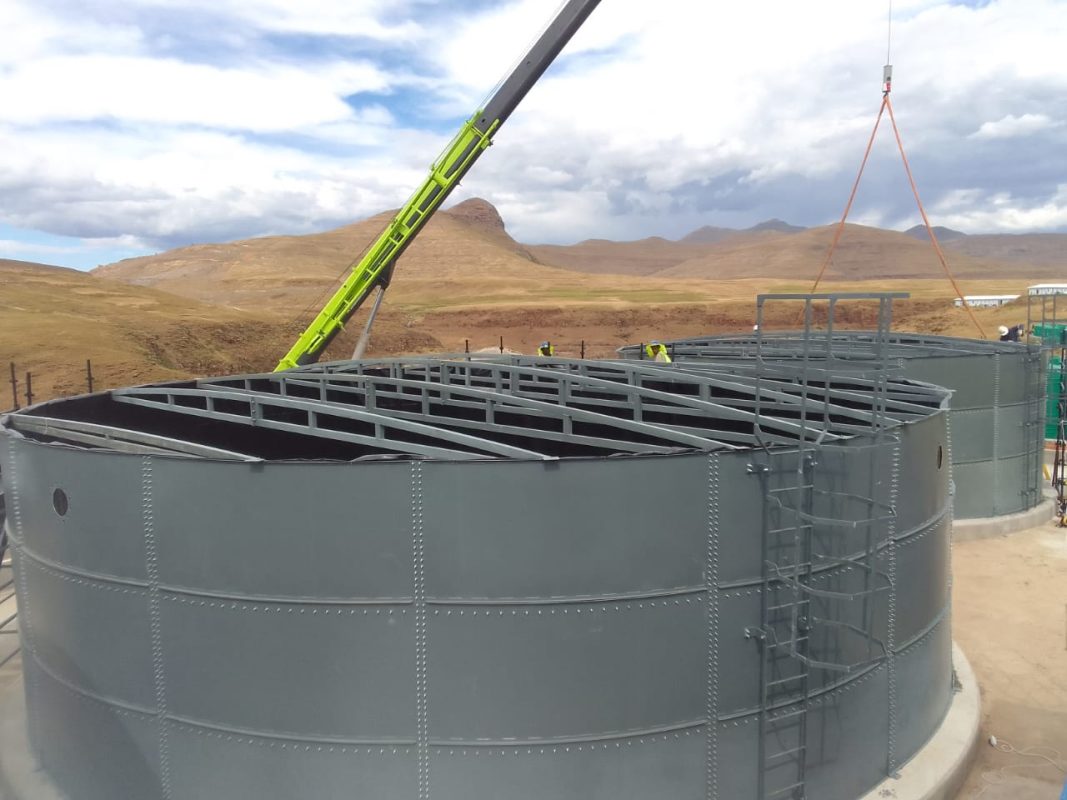
For a mining water-storage project, define the water duty, required operating volume, water conditions and installation access before choosing a tank. A nominal capacity alone does not establish that a configuration meets the site’s storage requirement.
Steel Water Tanks supplies storage for mining, process and remote-site applications. The useful starting point is a description of what the stored water must do, followed by a site layout and the information needed to confirm the tank, liner and installation scope.
Separate process water, site services and reserve requirements
Begin with the purpose of the storage. A process-water reservoir, potable-water supply and backup reserve can have different water conditions, operating requirements and connections. List each duty separately, even if the project team is considering a shared installation.
Record the required volume and the basis for it: a consultant’s specification, operating data or an estimate awaiting confirmation. If a reserve must remain available for a particular duty, make that requirement explicit. A general water-storage estimate should not become a fire-system specification; coordinate dedicated fire-water requirements with the fire system designer.
Give the tank team the water and operating conditions
Describe the water to be stored and provide the relevant water-quality information available to the project team. Identify process streams separately from potable water, and include known operating conditions and any changes expected during the project.
The published mining offer includes a standard GSM 720-G potable liner and non-potable liner options from GSM 550 to GSM 1000 for quotation. These descriptions do not establish compatibility with every process fluid. Steel Water Tanks must review the stored water and operating conditions before suitable materials and lining requirements are confirmed.
Ask the quotation to identify the agreed water duty, selected lining and any unresolved compatibility questions. This keeps a broad product description from being mistaken for a project-specific material approval.
Compare operating capacity, footprint and height together
The current tank sizing tool distinguishes operating capacity from nominal capacity. Use the operating figure when comparing the water volume needed, then confirm the final specification through the quotation.
Diameter determines the tank footprint, while ring count determines wall height. The listed footprint is not the complete installation area: the site plan also needs to accommodate the project’s foundations, access, surrounding equipment and adjoining work. Share the available dimensions and height constraints instead of selecting only by capacity.
Where capacity remains an estimate, state that clearly. The tool supports an initial comparison; it does not settle foundation design, water compatibility or the final tank configuration.
Plan the route to a remote installation area
Steel Water Tanks describes flat-packed delivery and on-site assembly for remote and cross-border mining projects. Access still needs to be assessed for the particular site. Provide the project location, route from the site entrance, delivery restrictions, unloading area and proposed work area.
Include access controls, working-hour restrictions and activities that could affect installation. A marked-up layout and relevant photographs can explain these interfaces more clearly than a general statement that the site is accessible.
The company’s mining and industrial page shows Kamoa Copper Mine and Zara Mining as examples of delivered work. Use those examples to discuss capability, then agree a scope for the new site’s conditions.
Make the installation boundaries clear
A useful quotation request identifies who will prepare the site, deliver and install the tank, provide adjoining pipework and confirm the relevant designs. List inlet and outlet requirements, access arrangements and any additional fittings already specified by the project team.
Record the intended installation period and the information still outstanding. The programme should be confirmed against the tank requirement and site readiness; a previous project’s timing is not a commitment for a new installation.
A compact information pack for the first discussion
- Water duty and required operating volume, with units and the basis for the requirement.
- Water-quality information and operating conditions for the stored water.
- Project location, delivery route and access restrictions.
- Available footprint, height constraints and a marked-up site layout.
- Known connections, fittings and adjoining-work responsibilities.
- Target installation period, project stage and unresolved technical questions.
Start with the duty and the site
Discuss your mining water-storage project with Steel Water Tanks. Share the water duty, required operating volume, location and access information so the team can review the configuration, materials and installation scope for your quotation.